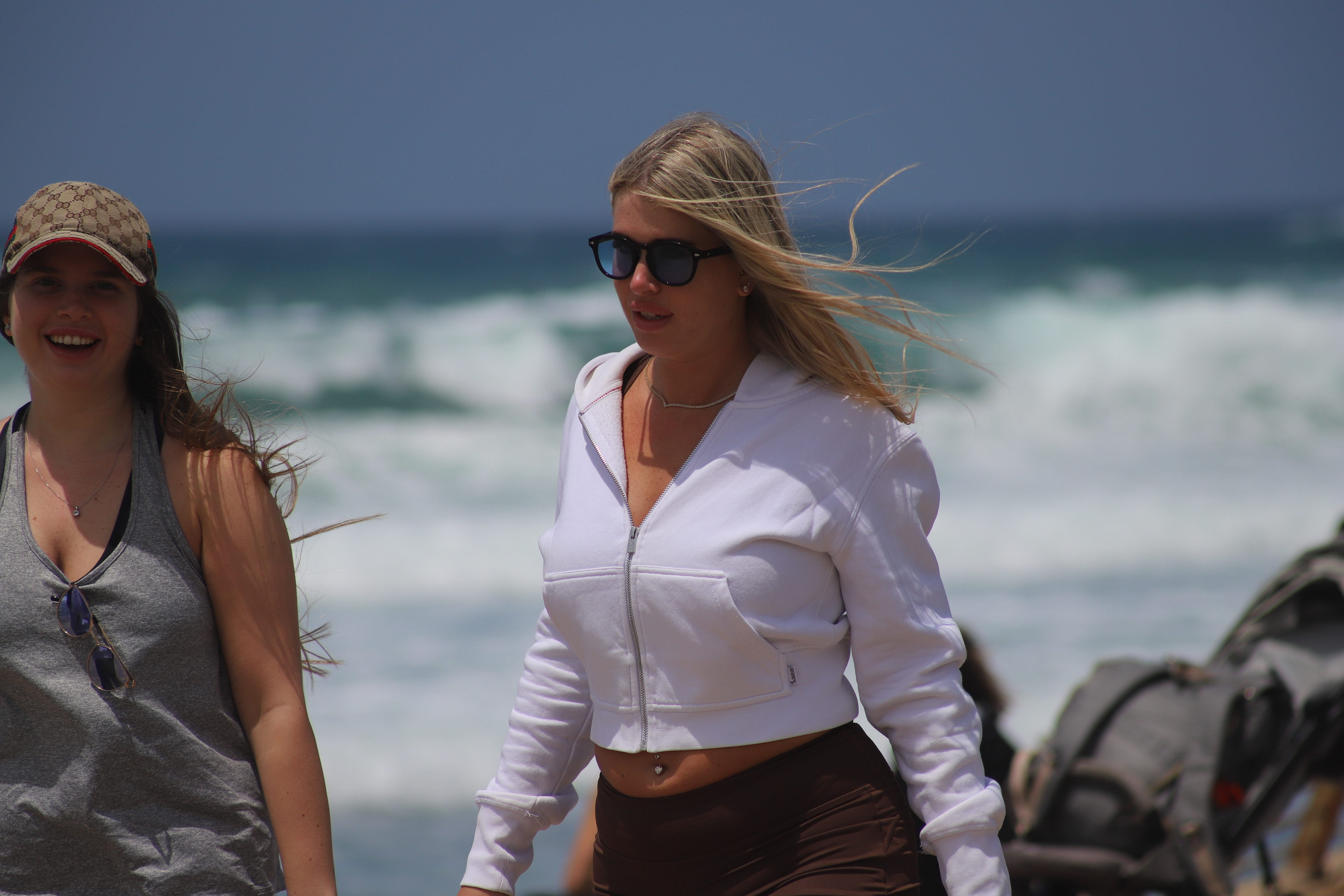
Wind doesn’t just move through this scene—it shapes it. You can almost feel the push of it in the way the hair lifts and stretches sideways, in the way clothing clings or loosens depending on fabric and cut. The whole frame sits somewhere between a casual walk and a moment that accidentally became styled. That’s the thing with coastal street fashion—it rarely tries too hard, but it lands anyway.
The woman in the center carries the look without forcing it. A cropped white zip-up hoodie, slightly structured but soft enough to move with the body, paired with high-waisted brown leggings that anchor the outfit with a deeper tone. That contrast—bright upper half, grounded lower half—keeps the silhouette clean and intentional. The hoodie sits just above the waistline, revealing a small gap that gives the outfit a sense of lightness, almost like it’s designed for motion rather than posing. Her sunglasses, matte and understated, pull the look together without competing for attention. Nothing oversized, nothing flashy—just functional, but sharp.
Then there’s the second figure, slightly off-frame, bringing a different energy. A sleeveless grey top, relaxed and breathable, paired with a patterned baseball cap that adds a hint of personality without overcomplicating things. It’s less curated, more spontaneous. The kind of outfit that suggests this wasn’t planned for photos, but still works visually. The cap, especially, feels like a small rebellion against over-styled beachwear—practical, slightly nostalgic, and a bit offbeat.
What makes the whole scene work is the environment pushing back. The ocean isn’t calm; waves are breaking hard in the background, turning into a soft blur that contrasts with the sharpness of the figures. That blur matters—it isolates the subjects just enough, making their outfits feel like they exist in a moving world rather than a static composition. Even the backpack in the far right background, slightly out of focus, adds to the narrative. Someone paused, or maybe just dropped their things to run toward the water. It’s not staged, and that’s exactly why it feels real.
Color-wise, the palette stays restrained—white, grey, brown, muted skin tones, deep ocean blues. Nothing loud, nothing seasonal in an obvious way. This is wearable across contexts, not just the beach. Strip away the waves, and these outfits could pass through a city street, a coastal café, or even an airport terminal without feeling out of place.
There’s also a subtle tension between fitted and relaxed elements. The leggings contour, the hoodie structures, the tank top loosens, the cap softens the whole thing. That balance is what keeps the look from tipping into either athleisure cliché or overly curated influencer style. It sits in that in-between space—practical, but aware.
And maybe that’s the real takeaway here. Street fashion doesn’t need a city anymore. Give it wind, movement, and a bit of unpredictability, and it adapts. The beach just happens to strip everything down to essentials—fabric, fit, and how it behaves when the environment refuses to cooperate.