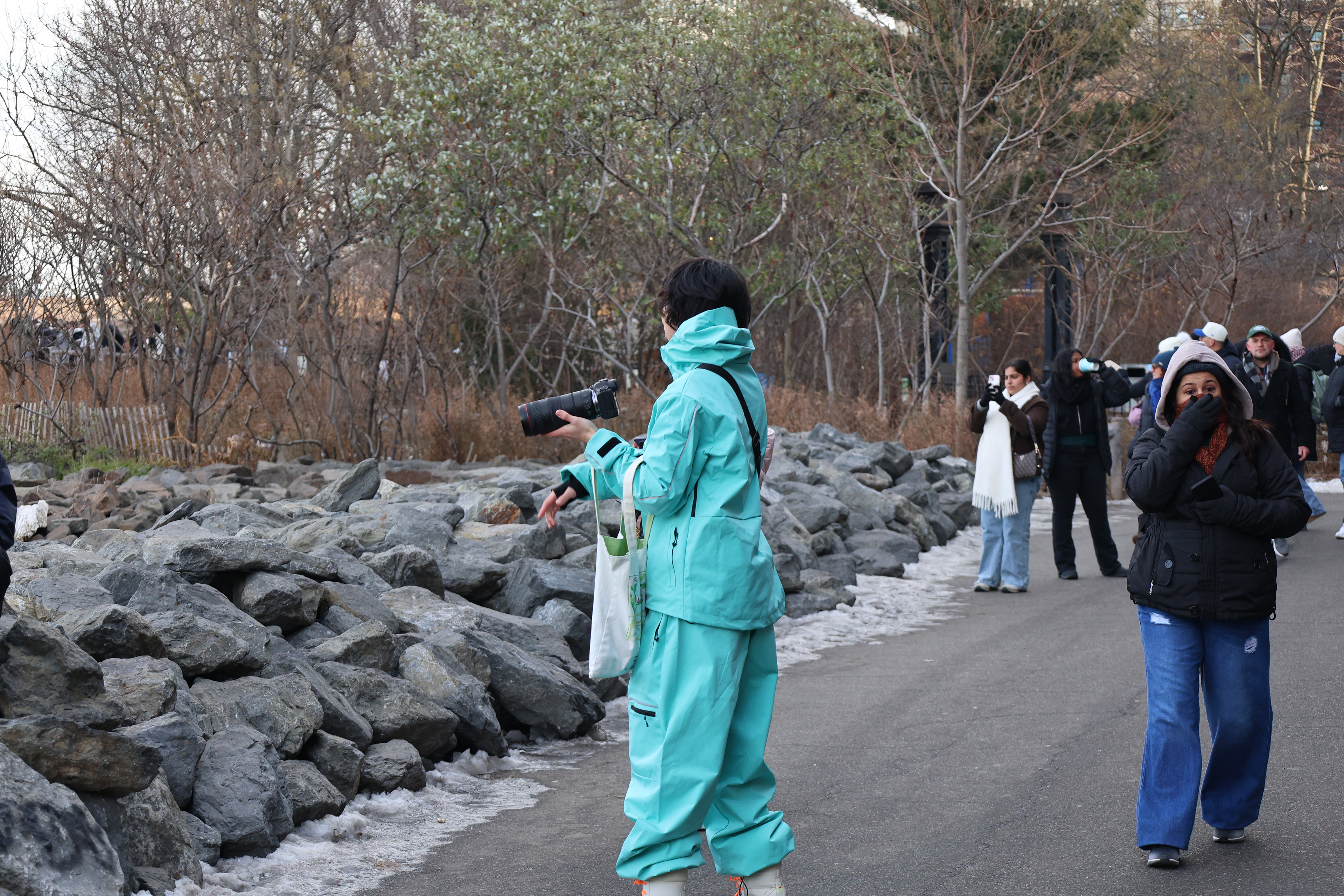
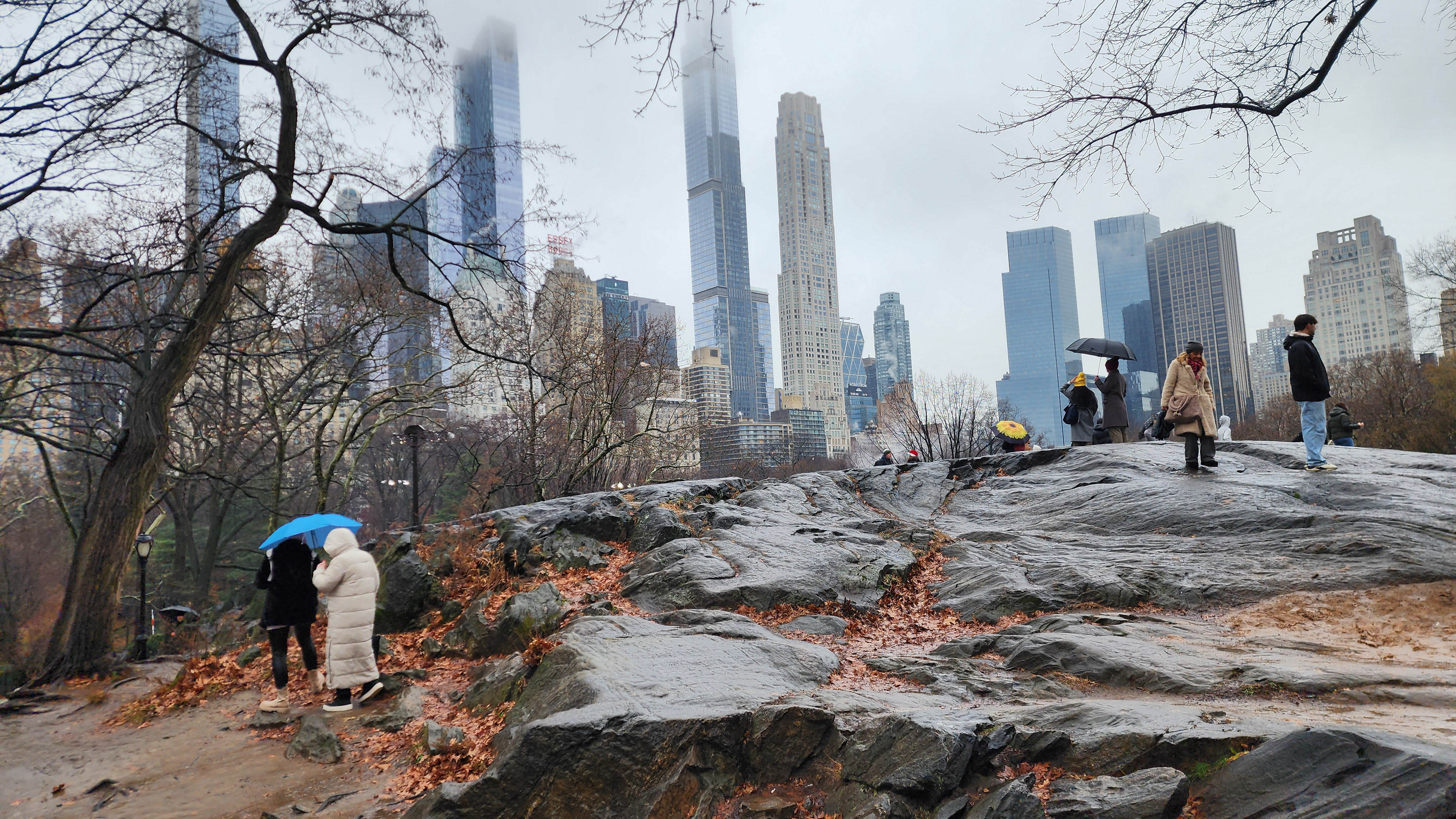
This image feels like winter photography in its raw, unfiltered form: not the romantic snow-globe version, but the real one where fingers go numb, breath fogs the viewfinder, and every decision takes longer than it should. The scene unfolds on a cold path bordered by rough gray rocks dusted with old snow, the kind that’s already lost its sparkle and turned into icy crust. Bare trees stand tangled and skeletal, their branches scratching at the pale sky, while a slow procession of people moves through the frame, all bundled up, shoulders raised, faces half-hidden. In the center, a photographer in a bright turquoise winter suit stands out like a glitch in the season, holding a camera with bare hands, the lens heavy and exposed to the cold, as if daring winter to interfere. That color alone tells a story: winter drains everything to gray and brown, and you have to fight to bring life back into the frame.
What makes winter photography so difficult isn’t just the temperature, it’s the way the season works against momentum. Batteries die faster, autofocus hesitates, gloves make you clumsy, and the light disappears early, sometimes just when you’re finally warming up creatively. You can see it in the body language of everyone here: people pausing, stopping, bracing themselves, taking photos quickly before retreating back into their coats. The photographer in turquoise is caught mid-gesture, one hand holding the camera, the other slightly open, maybe explaining something to themselves, maybe just trying to feel again. That’s winter photography in a nutshell, a constant negotiation between discomfort and obsession, between wanting to go home and needing just one more shot.
And yet, winter gives back in strange ways. The air is clean, shadows are sharp, colors become rare and therefore powerful, and people reveal themselves differently when they’re cold. Faces tighten, movements slow, and every photograph feels earned rather than taken. This image captures that quiet struggle beautifully, not through drama, but through persistence. Nobody here looks heroic, nobody looks warm, and that’s exactly why it works. Winter photography isn’t about perfection or comfort, it’s about staying outside long enough for the season to stop fighting you and start speaking in its own language. Sometimes that happens after five minutes, sometimes after an hour, and sometimes only when you’re already half frozen and thinking, maybe this was the last frame. Then you look at the screen, and you know it wasn’t.
Related