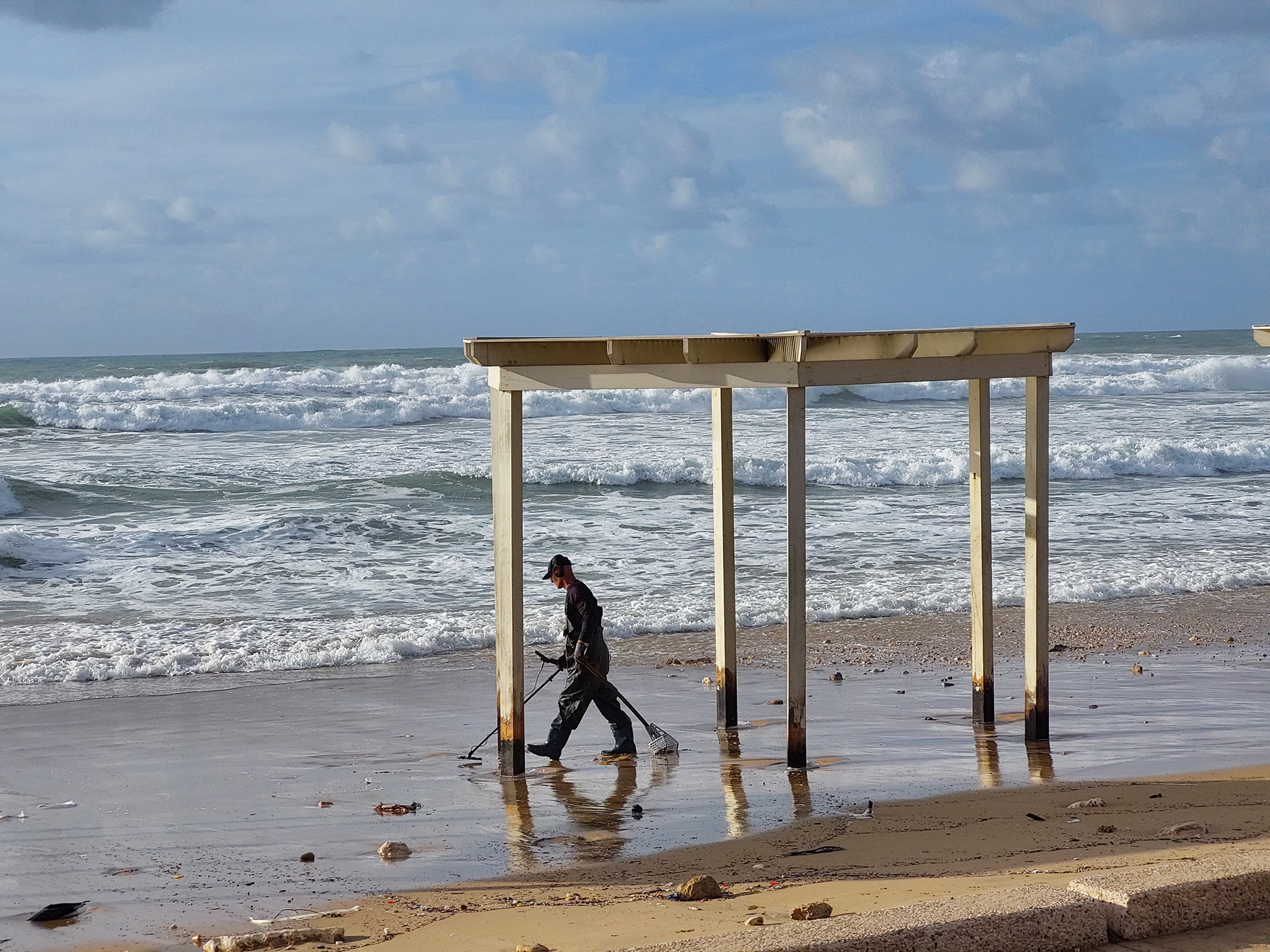
A solitary figure moves slowly along the shoreline, half framed, half sheltered by a pale wooden structure that looks like a stripped-down pier or a forgotten pergola left standing against the sea. The waves roll in behind him in layered bands of grey-green and white, restless but rhythmic, while the sky above feels heavy with soft, low clouds that refuse to dramatize the scene too much. He wears dark clothing and rubber boots, practical and unromantic, and holds a metal detector in one hand, its circular head hovering just above the wet sand as if listening for something hidden, something whispered rather than announced. In the other hand, a small shovel trails slightly behind, leaving a faint line that the next wave will erase without ceremony. The sand itself is cluttered with modest debris—stones, shells, fragments that might once have mattered—nothing glamorous, nothing obviously valuable, which somehow makes the act of searching more compelling. The wooden posts are stained darker at their bases, marked by years of saltwater and tide, and their reflections stretch downward in the slick surface of the sand, mirroring both structure and man in a slightly distorted way, as if the beach is quietly mocking the idea of certainty. This isn’t a romanticized treasure hunt with golden light and dramatic silhouettes; it feels more like persistence, a quiet ritual repeated day after day, where the reward may be a coin, a scrap of metal, or just the satisfaction of walking the edge between land and sea, listening for a signal that might never come, and doing it anyway.
Photography News: