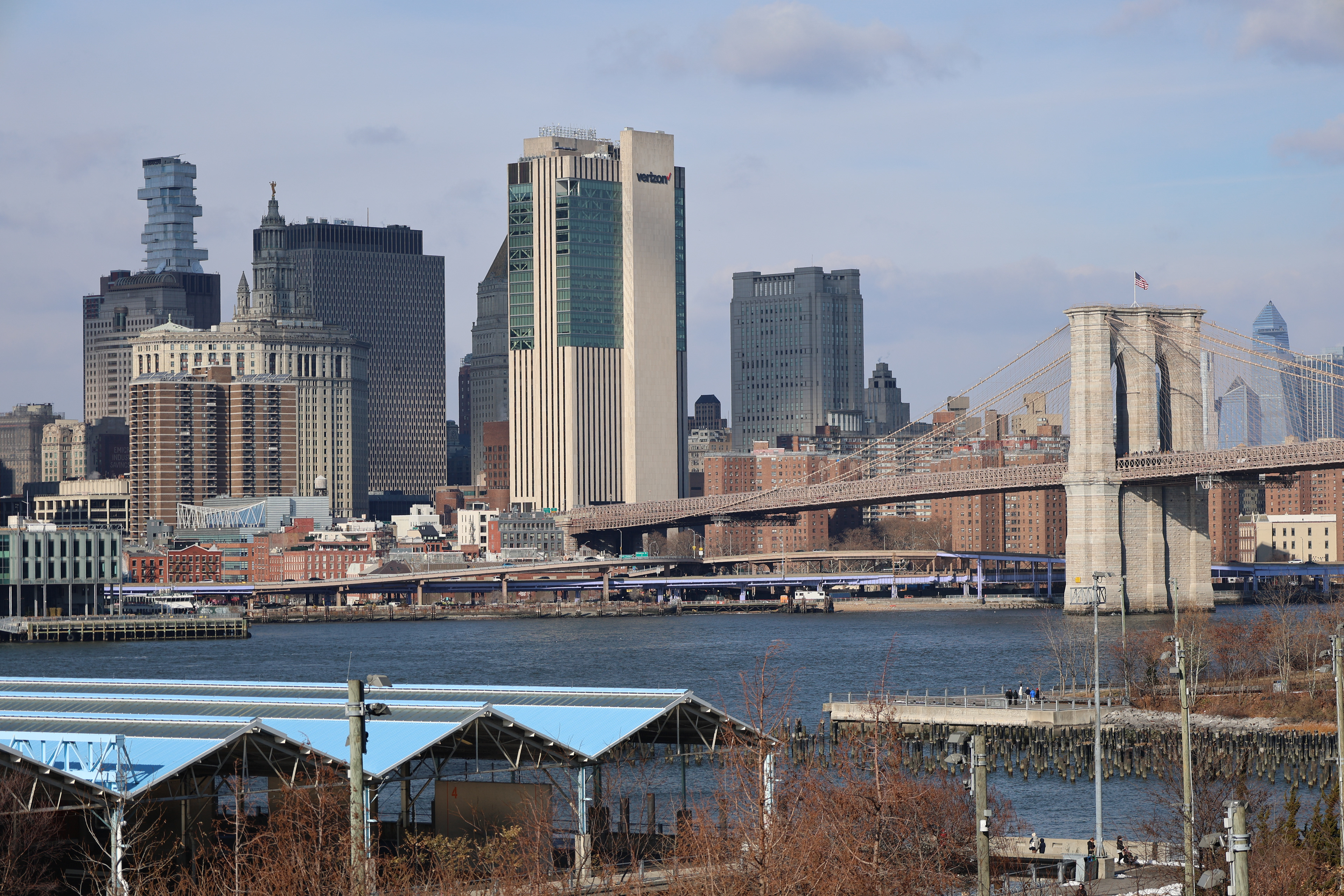
The Brooklyn Bridge sits in this frame like something that has already won the argument and no longer needs to raise its voice. The stone towers are massive, blunt, almost stubborn in their refusal to be decorative, rising from the river with the calm authority of infrastructure that knows it will outlast whatever is happening behind it. The cables stretch outward in disciplined lines, not dramatic, not romantic, just doing the job they’ve done for more than a century, holding weight, carrying motion, connecting two sides that would rather pretend they’re separate worlds. The American flag at the top is small but sharp, catching just enough wind to signal life, to remind you this is still a working object, not a relic wrapped in museum lighting. And behind it all, the skyline breathes, because the bridge allows it to. Glass, brick, concrete, old money, new money, weird money, all stack up without the bridge trying to compete. It simply exists, and that existence is louder than any attempt at reinvention.
The photograph itself feels like a lesson in restraint. The bridge is not centered, not isolated, not framed as a hero, and that choice matters. It cuts across the image like a sentence that keeps going, refusing to end where you expect. The river in the foreground flattens the drama, turning reflection into texture rather than spectacle, while the waterfront structures with their pale blue roofs look temporary, almost shy, as if they know they’re just visitors in a much longer story. The buildings behind the bridge rise in different eras and dialects of architecture, but none of them manage to steal the scene, because the bridge quietly holds the visual gravity. This is how landmarks survive: not by adapting, not by rebranding, but by staying so useful that no one dares touch them. Function becomes identity, and identity becomes untouchable.
As a photography reflection, this image pushes back against the postcard instinct. It shows how famous structures lose power when you chase them, when you isolate them, when you try to make them perform. Here, the bridge isn’t performing at all. It’s just there, doing what it has always done, letting the city rearrange itself endlessly behind it. Distance does the storytelling, not drama. Context does the work, not framing tricks. And maybe that’s the quiet takeaway: the most photographed things in the world don’t need more attention, they need more patience. If you step back far enough, they reveal themselves anyway, without asking.
Related